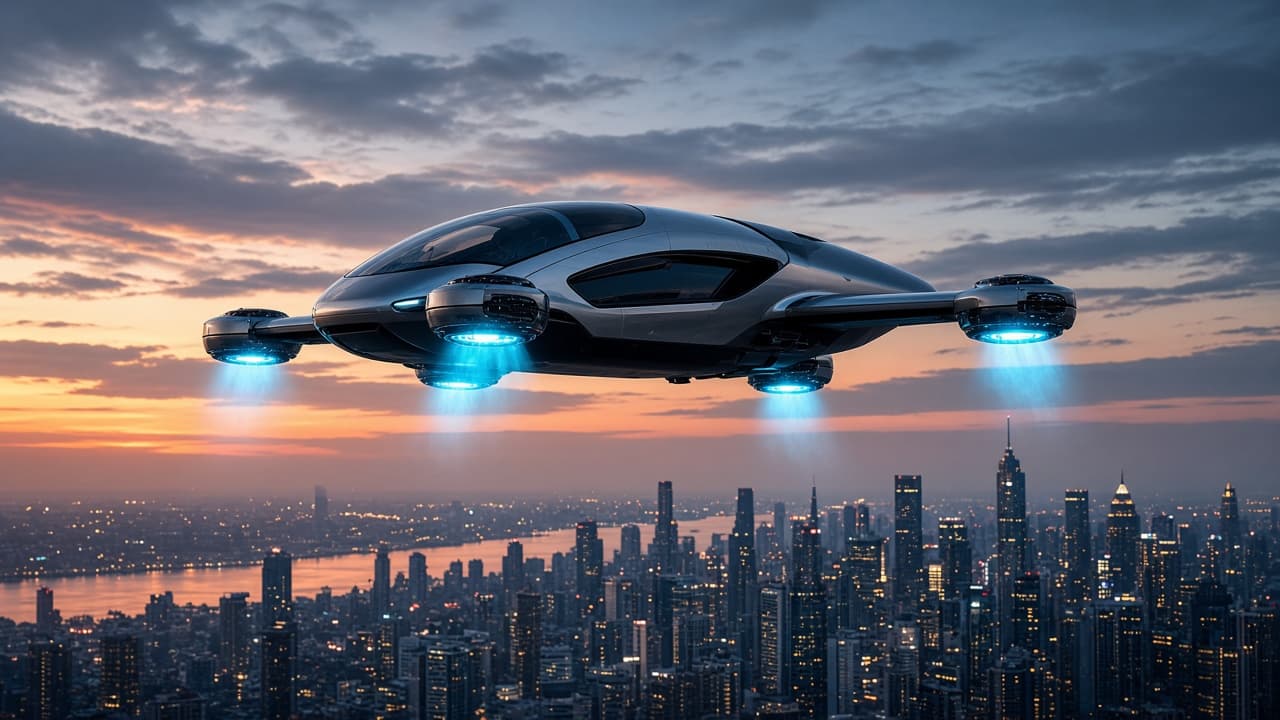
Flying cars keep making headlines. Behind the demos sits a hard stack: electric propulsion, battery density, autonomy, lightweight materials, and air-traffic software — the same themes Elon Musk and Tesla-era engineering keep circling.
What “flying car” really means in 2026
Most serious projects are eVTOLs — electric vertical takeoff and landing aircraft — not sci-fi cars with wings bolted on. The goal is short urban or regional hops with quieter electric motors instead of traditional helicopter complexity.
Elon Musk has publicly preferred tunnels and road autonomy over consumer flying cars, arguing air traffic and safety make personal flight harder than people think. Still, the technologies Tesla and SpaceX popularized — batteries, motors, autonomy software, and lightweight structures — sit at the center of every serious eVTOL conversation.
Core technologies used in flying-car / eVTOL systems
Electric propulsion: distributed electric motors and ducted fans replace heavy combustion powertrains, improving redundancy if one rotor fails.
High-density lithium batteries and advanced battery management systems (BMS): energy density decides range; thermal management decides safety.
Lightweight materials: carbon-fiber composites and high-strength alloys keep mass down so batteries can carry useful payload.
Flight controllers and avionics: real-time embedded software stabilizes hover, transition, and landing — closer to drones and aircraft than to a normal car ECU.
Autonomy and sensors: cameras, radar/lidar stacks, GPS/IMU fusion, and AI perception for obstacle avoidance and assisted landing — cousins of self-driving vehicle tech.
Air traffic and connectivity: 5G/satellite links, geofencing, and UTM (unmanned traffic management) software so vehicles do not collide in crowded airspace.
Simulation and digital twins: CFD aerodynamics, hardware-in-the-loop testing, and software validation before anyone leaves the ground.
Why Musk’s ecosystem still matters to this story
Even when Musk argues against mass-market flying cars, Tesla’s work on power electronics, battery packs, Dojo-scale AI training, and Full Self-Driving perception keeps feeding the same capability tree eVTOL startups need.
The professional takeaway: flying cars are not one invention. They are a systems product — energy, autonomy, materials, and regulation must mature together. Until battery energy density, certified autonomy, and airspace rules catch up, demos will stay ahead of daily commuting.