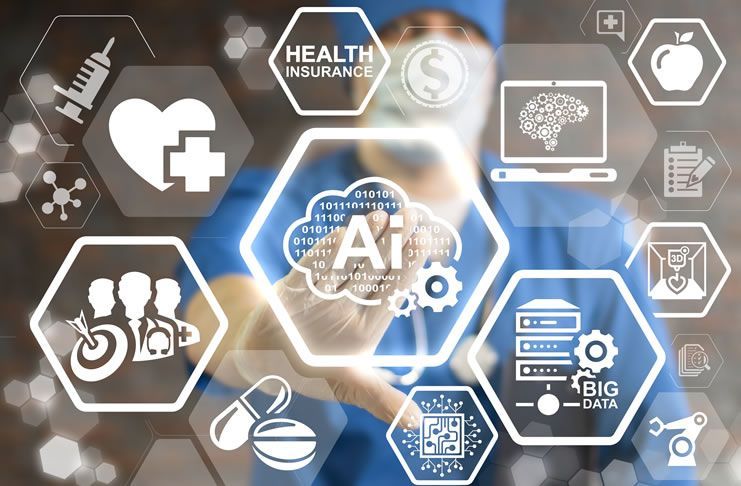
The world of healthcare has undergone a significant transformation over the years. Technology has played a crucial role in revolutionizing the way we approach healthcare, and the use of Artificial Intelligence (AI) has taken things to a whole new level. AI is increasingly becoming a key player in healthcare, particularly in medical diagnosis. In this blog, we will explore the role of AI in healthcare and how it is transforming medical diagnosis.
#### **What is Artificial Intelligence?**
AI is a branch of computer science that deals with the development of intelligent machines that work and react like humans. These machines are designed to perform tasks that typically require human intelligence, such as decision-making, speech recognition, and language translation.
#### **AI in Healthcare: A Game-Changer**
The healthcare industry is one of the most dynamic and challenging fields that require cutting-edge technology to enhance service delivery. AI has the potential to transform the way healthcare professionals approach diagnosis, treatment, and patient care. Here are some of the ways AI is changing the game in healthcare.
#### **Medical Diagnosis**
AI-powered medical diagnosis is a game-changer in the healthcare industry. AI algorithms can analyze vast amounts of patient data and provide a more accurate diagnosis in a shorter amount of time. This technology is particularly useful in detecting rare diseases that may be challenging to diagnose using traditional methods.
#### **Image Analysis**
AI is also being used to analyze medical images, such as x-rays, CT scans, and MRI scans. This technology can detect abnormalities that may be missed by the human eye, enabling early detection of diseases such as cancer.
#### **Virtual Assistants**
AI-powered virtual assistants are also becoming a vital part of the healthcare industry. These virtual assistants can provide patients with real-time medical advice, schedule appointments, and even remind them to take their medication.
#### **Electronic Health Records**
AI algorithms are also being used to analyze electronic health records (EHRs) to identify patterns that may indicate potential health issues. This information can be used to improve patient care and enable the early detection of diseases.
#### **The Benefits of AI in Healthcare**
AI is revolutionizing the healthcare industry and has numerous benefits. Here are some of the key advantages of using AI in healthcare.
#### **Accurate Diagnosis**
AI algorithms can analyze vast amounts of data and provide a more accurate diagnosis in a shorter amount of time.
#### **Faster Diagnosis**
With AI-powered medical diagnosis, patients can receive a faster diagnosis, which can lead to earlier treatment and better health outcomes.
#### **Improved Patient Care**
AI-powered virtual assistants can provide patients with real-time medical advice, schedule appointments, and even remind them to take their medication, resulting in improved patient care.
#### **Cost-Effective**
AI technology can reduce the cost of healthcare by reducing the number of medical errors and unnecessary tests, leading to cost savings.
#### **Challenges of AI in Healthcare**
Despite the numerous benefits of using AI in healthcare, some challenges need to be addressed. Here are some of the key challenges of using AI in healthcare:
#### **Data Privacy**
The use of AI requires the collection and analysis of large amounts of patient data, which raises concerns about data privacy and security.
#### **Regulatory Framework**
There is a need for a regulatory framework to govern the use of AI in healthcare to ensure that the technology is used safely and effectively.
#### **Technical Limitations**
AI technology is still in its infancy, and there are technical limitations that need to be addressed to make the technology more effective.
#### **The Future of AI in Healthcare**
AI is the future of healthcare, and the technology is expected to play an increasingly important role in medical diagnosis and patient care. As technology continues to evolve, we can expect to see more innovative solutions that will transform the way we approach healthcare. However, there is a need for a regulatory framework to govern the use of AI in healthcare to ensure that the technology